Tradee / A Financial Learning Platform
Details
Project • 2022
Finance · Education
Most young investors enter the stock market without knowing what they are doing. Every app they use is designed to get them trading faster.
TRADEE goes the other way. It is an investment app that requires users to build a foundation before the trading section will open at all.
01 — The Phenomenon
Young people can invest. Most shouldn't yet.
Fintech digitalisation, the rise of Finfluencers, and near-zero savings rates in Germany (7.3% inflation in 2022 against a 0.1% deposit rate) pushed a new generation into the stock market. Investors aged 20 to 29 in Germany grew by 77% by 2019.
But access outpaced education. Young investors arrived emotionally, driven by social media, sensation-seeking, and overconfidence, and took on risks they did not understand.
The core problem is not that beginners invest. It is that the platforms they use are optimised for engagement rather than learning. One-click trading, gamification, and leaderboards create the illusion of competence. Unnecessary losses follow. Motivation drops.
"Everyone wants to invest. Nobody knows where to start."
02 — The Research
Three lenses, and twenty-five people who wanted in
Desk research came first.
People. Retail investors now make up roughly 25% of US equity trading, and for many young ones, Finfluencers have replaced financial advisors. The literature is consistent: their decisions run on self-esteem, sensation-seeking, and emotion rather than fundamentals.
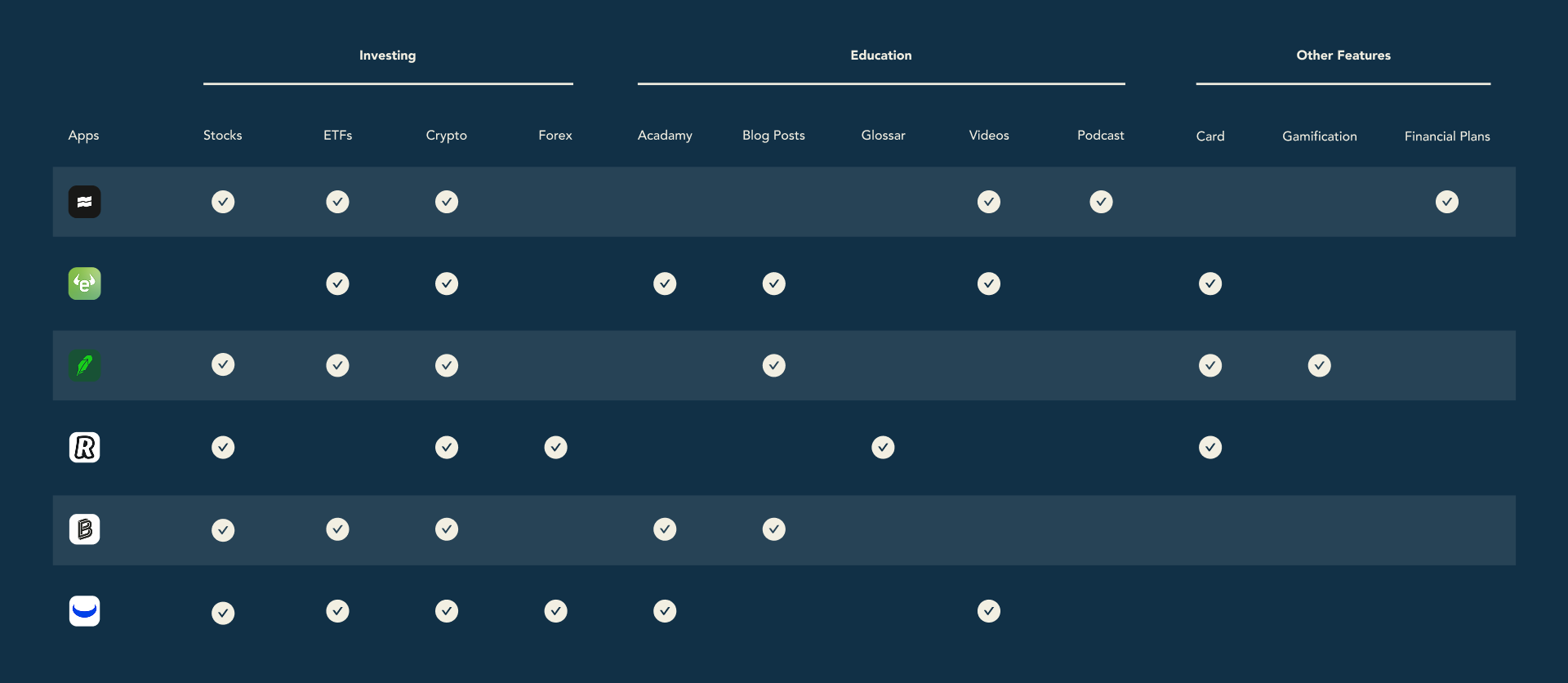
Platforms. Robinhood, eToro, and Trade Republic compete on "easy", "low-fee", and "one-click". Leaderboards, confetti, and social feeds lower the friction to invest and raise the odds of an impulsive decision. After GameStop, regulators started calling these dark patterns.
Principles. Long-term investing, sustainable investing, and access paired with accountability. Those three became TRADEE's design principles.
Then primary research. A questionnaire of 25 participants aged 20 to 30 found 88.3% highly interested in investing and 65% already trading, but none with more than two years of experience, and none willing to spend more than 10 hours a week learning.
Interviews with those beginners covered what they did before investing, how they decided, and how they felt while trading. I also analysed 30 episodes of a Finfluencer's podcast Q&A to document the questions beginners actually ask. Three patterns kept surfacing: emotional volatility, no personal criteria for deciding, and no idea how to allocate.
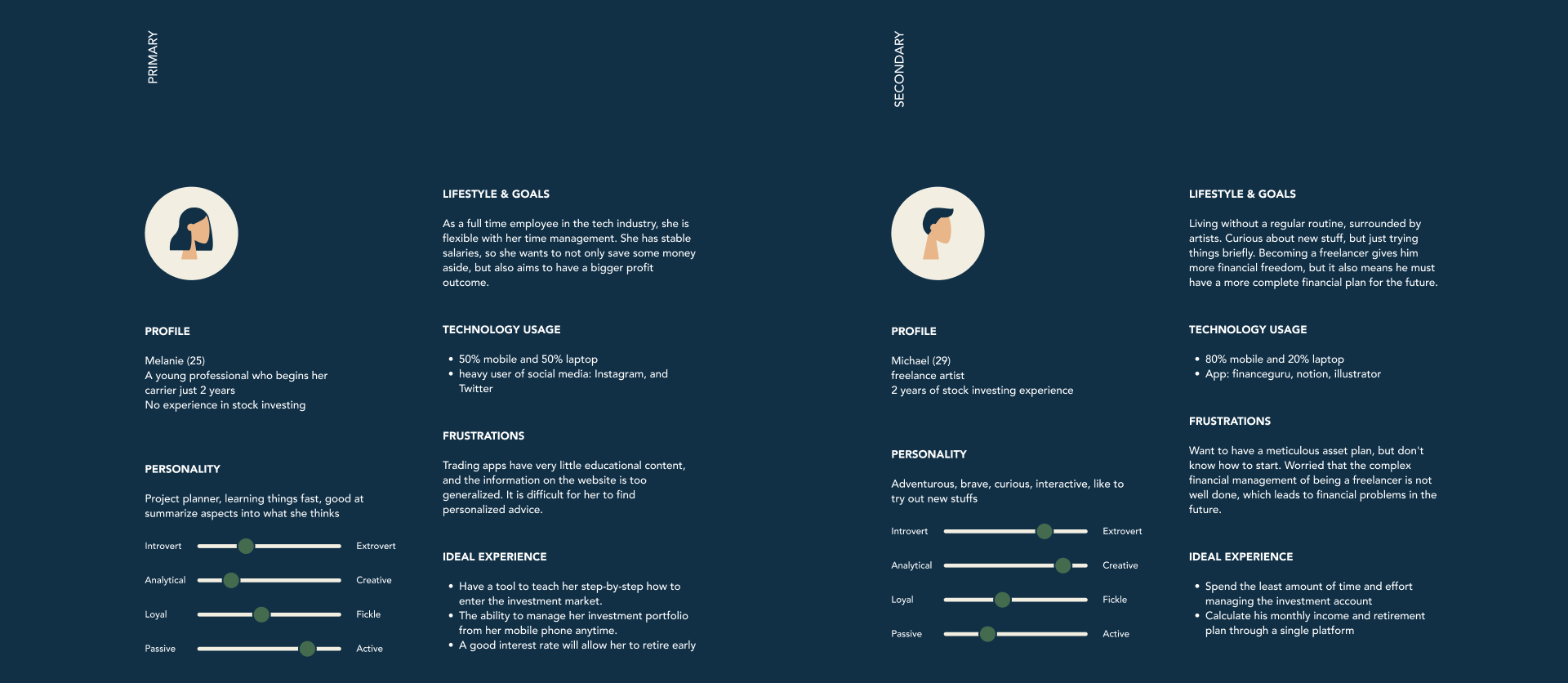
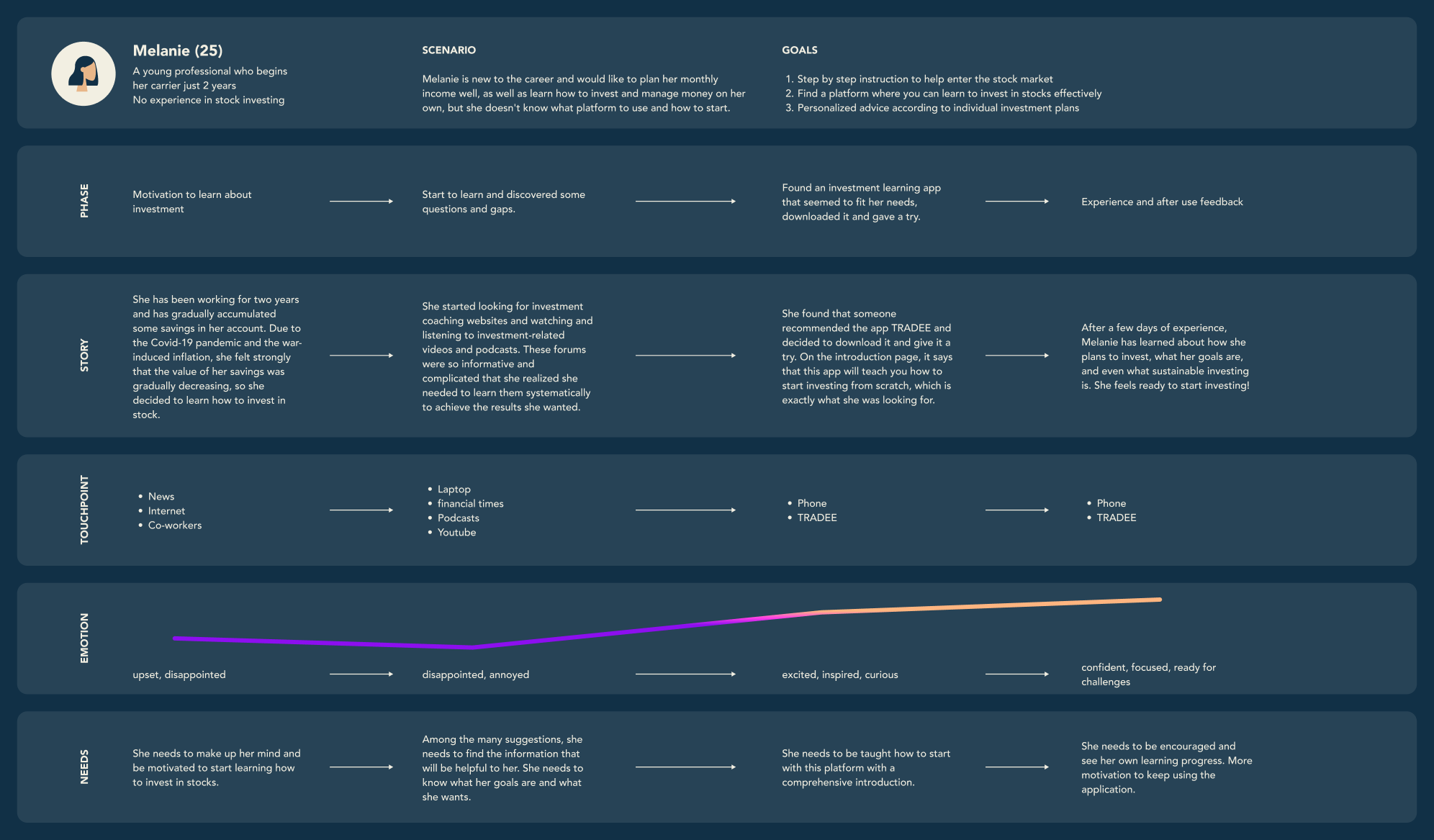
From that came two personas. Melanie, 25, systematic. Michael, self-taught and reckless. Melanie's journey defined the core requirements, which became the information architecture and a mini design system.
03 — The Hypothesis
What if onboarding was the product?
Two questions drove the design direction. Can personalisation help users understand their risk tolerance and evaluate their plans more effectively? And can setting investment preferences build confidence and reduce the friction of deciding?
From the research, four pre-investment requirements emerged. Things every beginner should know before their first trade:
- ·Investor's personality, understanding your own risk tolerance
- ·Goal setting, knowing what you are investing toward
- ·Sustainable investing, aligning money with values
- ·Stock quote reading, understanding the basics of what you are buying
The hypothesis: if these four gates are required rather than optional, users will enter the market with more self-awareness and make healthier decisions.
04 — The Product
Four steps. Then you can trade.
TRADEE keeps the investment section locked until all four modules are complete.
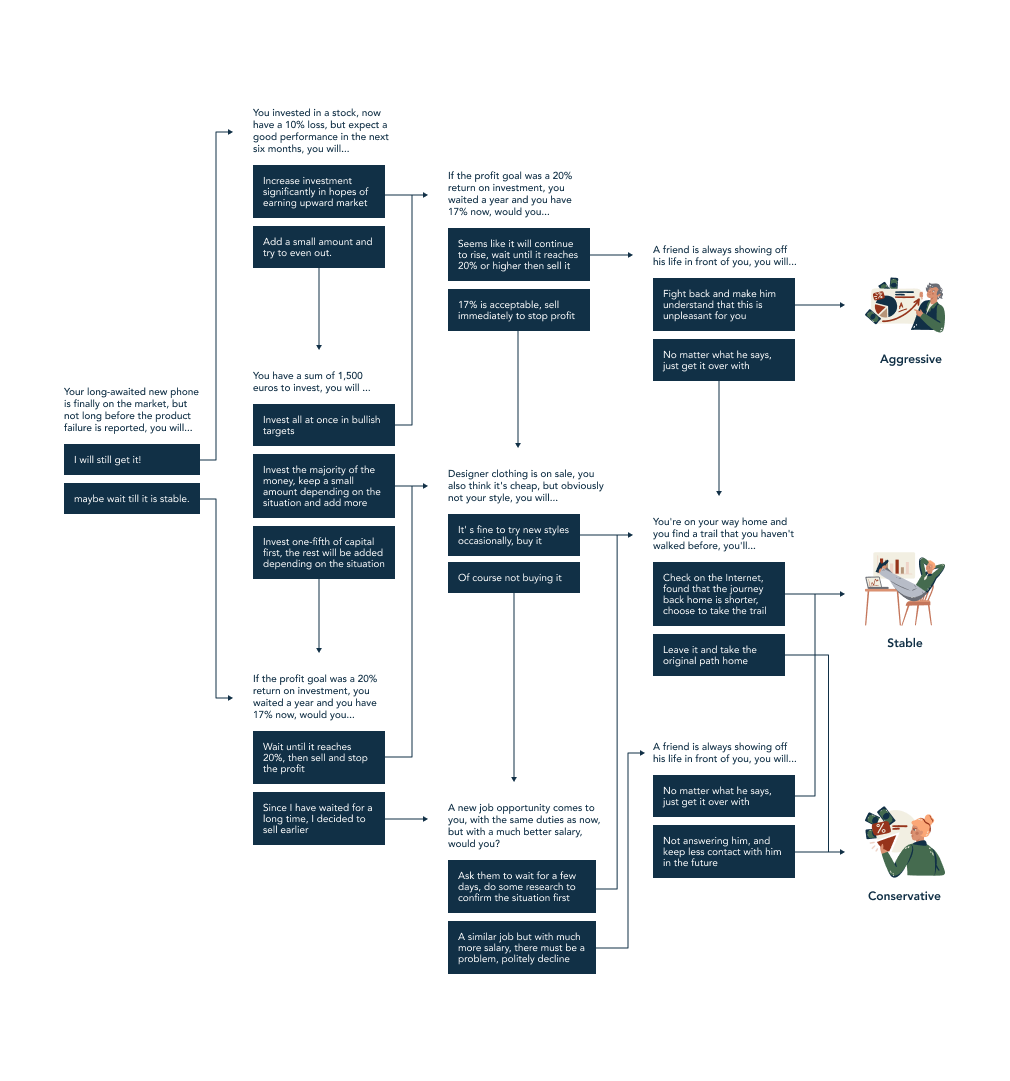
Step 1, Investor Personality. A short questionnaire maps users to Aggressive, Stable, or Conservative types and suggests a matching asset allocation.
Step 2, Goal Setting. An interactive chart projects investment growth over 10, 20, and 30 years based on monthly contributions, turning an abstract goal into a number you can see.
Step 3, Sustainable Investing. Users learn about ESG, SRI, and Impact Investing, then set preference sliders that filter their options later.
Step 4, Stock Quote Reading. A simulated stock detail page teaches the fundamental terminology with inline explanations and visual cues.
05 — Testing
Fifty-three people, four scenarios, all above threshold
53 participants completed a SUS (System Usability Scale) questionnaire across all four scenarios. Every feature cleared the 68-point usability threshold:
- ·Read a stock quote, 84.5
- ·Goal setting, 78.75
- ·Investor's personality, 76.5
- ·ESG factors, 76.0
In-person prototype sessions told a more interesting story than the scores. Regardless of how much investing experience participants arrived with, they described feeling more motivated and more self-aware after completing the four steps. The gate did not feel like an obstacle to them. It felt like preparation.
06 — Reflection
Design the first step, not the whole journey
TRADEE showed that a mandatory learning gate, not a tutorial and not optional tooltips, changes how beginners approach investing. When users have to define their personality, set a goal, align with their values, and understand what they are buying, they enter the market differently.
What I would explore further: adaptive learning that responds to real portfolio behaviour over time, a social layer that informs rather than competes, and stricter guardrails for the most vulnerable users.
This project sits where behavioural economics, design, and financial literacy meet. It is still an underserved space, and it is why I care about products that make people more capable rather than more dependent.
Thanks for reading.
 →
→